
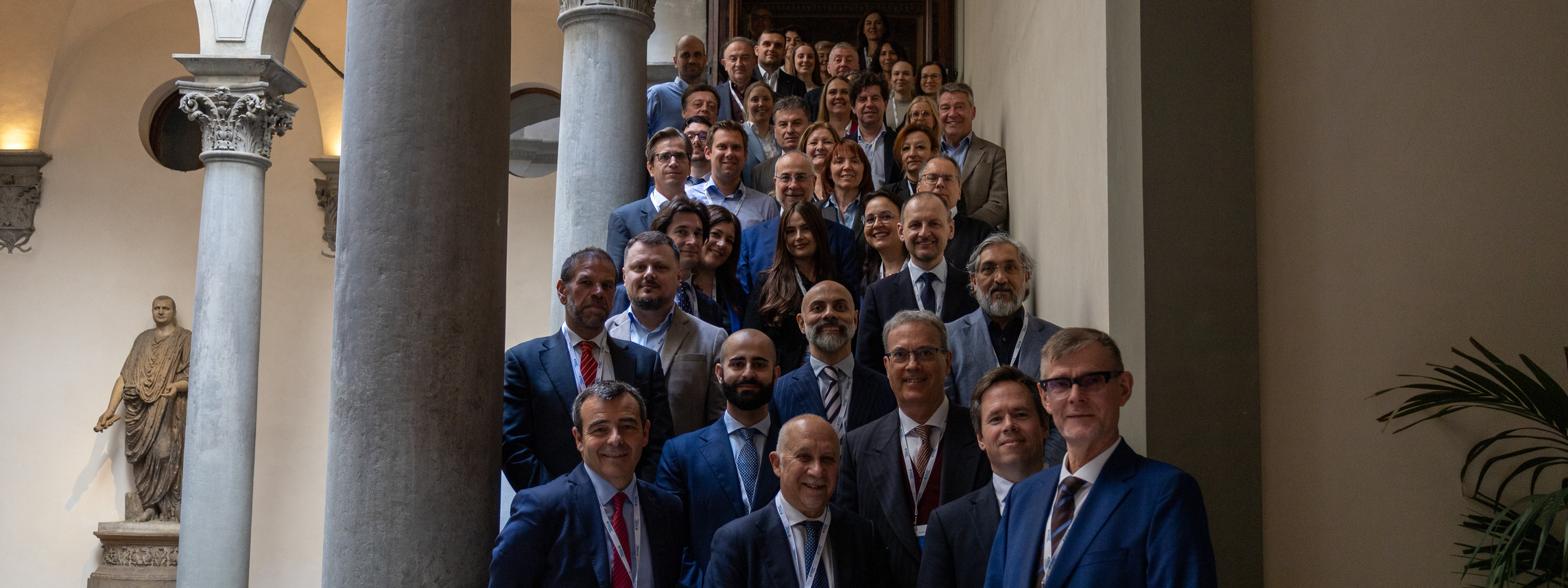
EFDI EU Committee Meeting in Florence
Florence, 22–23 April 2026
The European Forum of Deposit Insurers (EFDI) successfully held its EU Committee Meeting on 22 and 23 April 2026 in Florence thanks to the kind hospitality of the Fondo di Garanzia dei Depositanti (FGDCC).
The meeting took place immediately following the publication of the revised EU Crisis Management and Deposit Insurance (CMDI) framework on 20 April, making the discussions particularly timely and policy relevant.
In addition, hosting the meeting in Florence offered a meaningful historical perspective, made even more tangible —in terms of the experience— by the venue itself: Palazzo Gondi, a monumental building listed in the UNESCO World Heritage Site designation for the historic center, which is still managed by the heirs of a well-known Florentine banking family.
As a cradle of modern banking, the city’s early experience with debt, bankruptcy and financial crises echoes many of the challenges addressed by today’s CMDI framework. While the instruments have evolved, the underlying objective remains the same: preserving trust through effective legal frameworks.
During two days, the EU Committee engaged in substantive and forward‑looking exchanges on the implementation and implications of the CMDI reforms, as well as on EFDI’s ongoing and future work.
A central highlight of the meeting was the keynote speech delivered by Miguel Carcaño Sáenz de Cenzano, Vice‑Chair of the Single Resolution Board (SRB), who provided an authoritative overview of the new CMDI framework and its expected impact on the EU crisis management landscape. His intervention set the tone for a rich and detailed discussion on several important innovations to the crisis management framework, particularly strengthening cooperation between the Single Resolution Board and Deposit Guarantee Schemes (DGSs). These changes mark a significant step in the European framework.
The keynote address was followed by a high‑level roundtable discussion on the reform of the CMDI framework, moderated by Prof. Marco Bodellini (University of Bergamo; Of Counsel, PwC Legal – Milan). The panel featured, among others, Paul Kulkarni (Head of Unit, SRB), and Gianluca Aloia (Senior Director, Resolution Unit, Bank of Italy). The discussion allowed for an in‑depth exchange on the policy objectives, technical design and practical implications of the CMDI reforms, as well as on the role of deposit guarantee schemes within the renewed framework.
A second key moment of the meeting was the final roundtable on conclusions and future developments, moderated by Prof. Concetta Brescia Morra (Chair of EU Financial Law, Università degli Studi Roma Tre). This concluding session brought together Stefan Tacke (EFDI Chairman), Carlos Colao (EFDI Secretary General) and Roberto Di Salvo (General Manager, FGDCC), and provided an opportunity to reflect on the outcomes of the discussions and outline priorities for EFDI’s future actions.
Throughout the two‑day meeting, participants also discussed (i) the analytical documents prepared by the Banking Union Working Group on CMDI and the European Commission’s targeted consultation on the competitiveness of the EU banking sector, (ii) the work of the DGSD Working Group on Third‑Country Branches, and finally (iii) the deliverables from Cross-Border Working Group related to passporting, agreements on data processing, and forthcoming EFDI initiatives.
EFDI would like to warmly thank the rest of the speakers and contributors for their valuable insights and engagement. In particular:
- Juliane Seiter and Marcello Bredice, Co‑Leaders, EFDI Banking Union Working Group
- Renata Kadlecová, Co‑Leader, EFDI D3I Working Group
- Professor Dalvinder Singh, University of Warwick
- Pénélope Trumble, Head of Belgian DGS
- Daniel Nový, GSFT, Czech Republic
- Borja Peletero, Leader, EFDI Cross‑Border Working Group
- Ana Lillo and Anneka Beccarelli, Co‑Leaders, EFDI Legal Sub-Group
EFDI also extends its special thanks to the host Deposit Guarantee Scheme, Fondo di Garanzia dei Depositanti (FGDCC), and in particular to Roberto Di Salvo, Marcello Bredice, Rosario Messina and Alessio Greco, for their outstanding hospitality, excellent organisation and close cooperation with the EFDI Secretariat.
Finally, EFDI would also like to warmly thank all participants, both those attending in person in Florence and those joining remotely, for their active engagement and valuable contributions throughout the meeting. The high level of participation, the quality of interventions and the openness of the exchanges greatly enriched the discussions and were instrumental in making the EU Committee meeting a success. This strong engagement once again demonstrated the commitment of the EFDI community to constructive dialogue and close cooperation at a critical juncture for the European crisis management and deposit insurance framework.
*****